Featured project
Mapping Chaotic Gravitational Basins
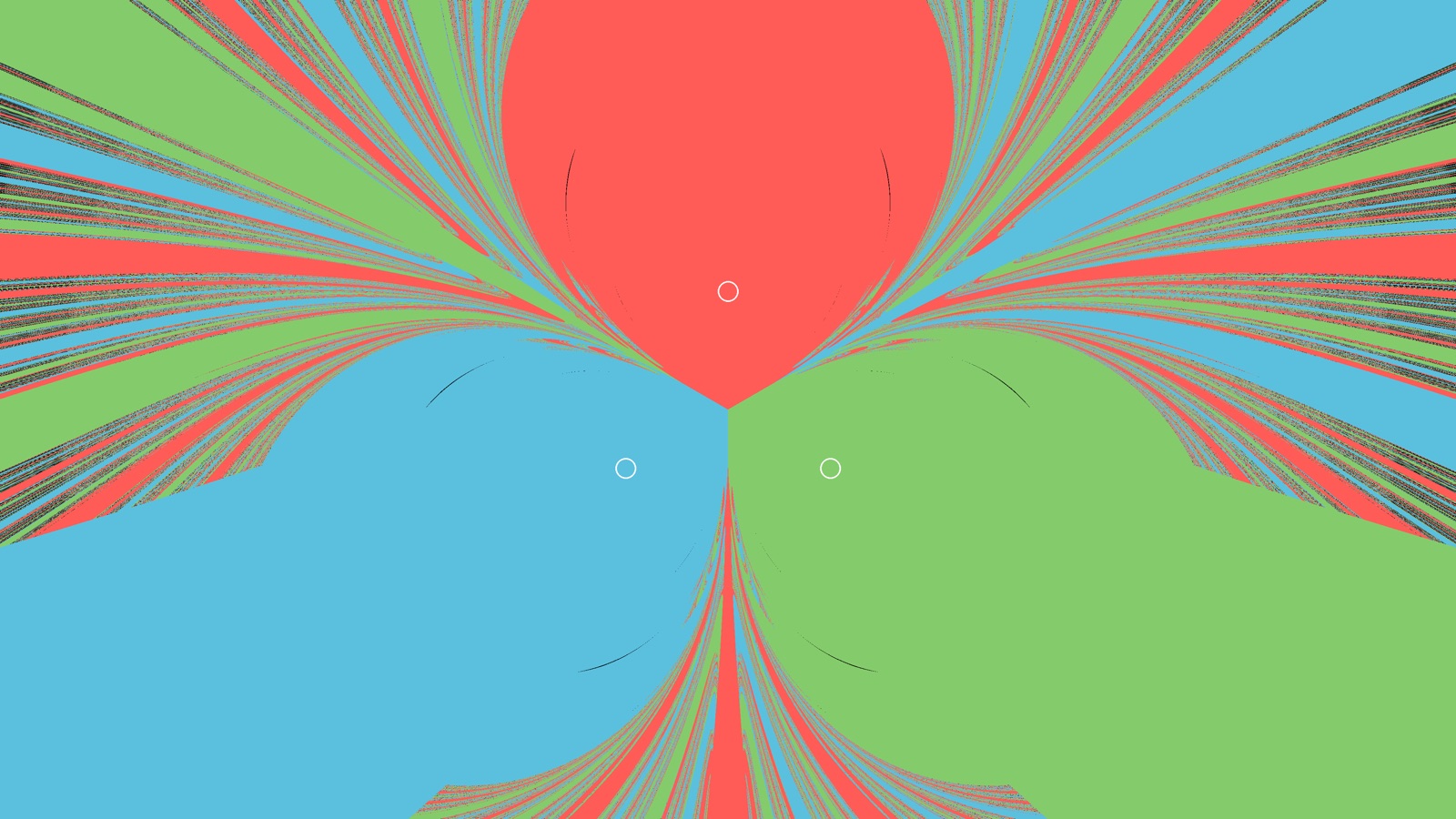
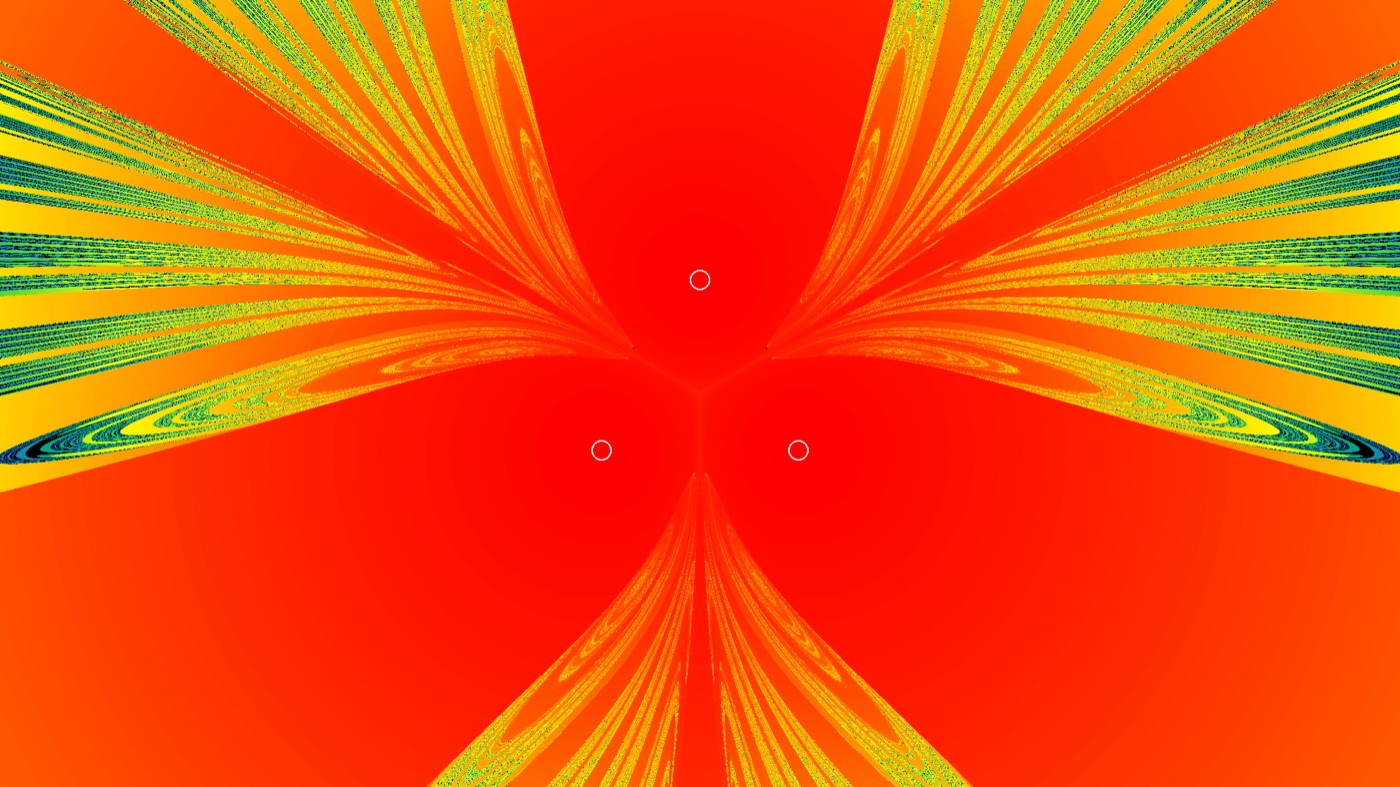
Visualising what the gravitational basins for n fixed masses may look like. Clicking this button will frac…tal your mind. Yeah, that sounded better in my head.
An open-source physics simulation by Nirav Ramdhanie.
All the planets are held fixed in space. An asteroid is released from rest at every starting point, is influenced by the gravity of the planets until it collides with one or runs out of the allotted maximum time. We then colour the start by which planet it hit (or by how long it took to collide) and in the end is a map of collision basins. The boundary is chaotic and looks to be Wada-like if you zoom in.
Now make like the asteroids and click that enticing button.
Interactive visualiser
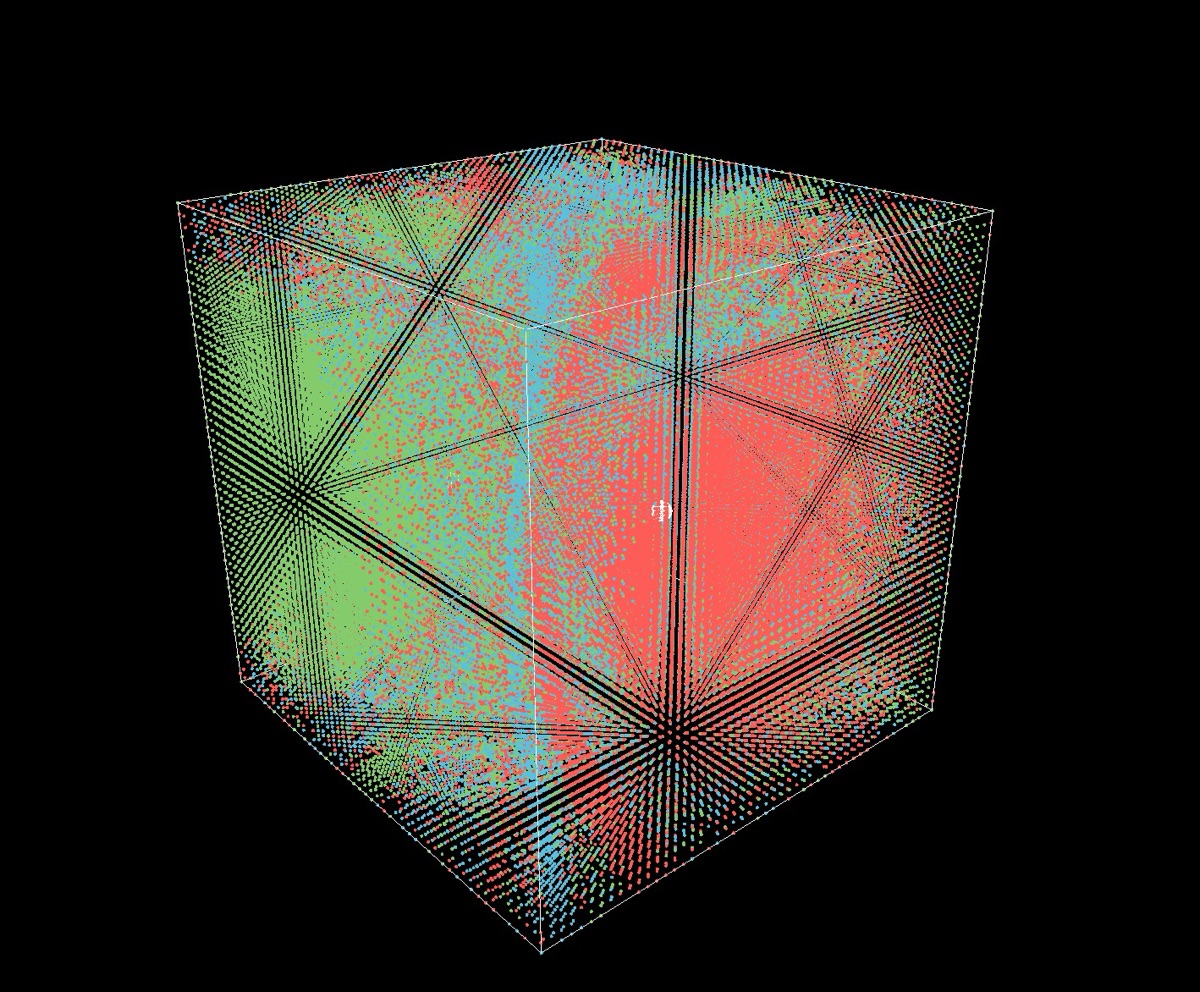
Explore the 4-D basins for the Restricted 4 Body System. 6.25 million asteroids were simulated.
Gallery
Renders and screenshots.
Built with
Runs on an NVIDIA GPU (CuPy / CUDA); macOS is not supported.
MIT-licensed · © 2026 Nirav Ramdhanie